Who is working on hemangiosarcoma
Scientists in the United States and Europe are trying to find this cancer sooner and treat it better. Here is who they are and what each of them is working on, in plain English.
Why finding it early matters
Hemangiosarcoma is a cancer of the blood vessels. It often grows with no signs, or only mild ones, until a tumor bleeds. By then it has usually spread, most often to the lungs and liver. German Shepherds, Golden Retrievers, and Labs are among the breeds that get it most.1
There is still no test that reliably finds it early. Screening blood tests like Nu.Q Vet can flag possible cancer, but they don't diagnose it, and a negative result does not rule it out.
Shelby, the German Shepherd this fund is named for, was playing fetch a few days before she got sick. She died less than 48 hours after her vet visit. A test that could catch it at a routine checkup, before it bleeds, might give dogs like her a chance. That is why so much of the work below is about finding it early.
The studies Morris has funded
Morris Animal Foundation is a nonprofit that has funded animal health science since 1948. Its Hemangiosarcoma Initiative has funded 12 studies so far. Its update from August 26, 2026 names these 11 researchers.2
Finding it early
- Andrea Pires dos Santos, Purdue UniversityWorking toward an early blood test using microRNAs, tiny molecules that could flag hemangiosarcoma in a blood sample. In March 2026 her team reported 13 microRNAs in spleen tumors and 13 in heart tumors that differ from tissue without cancer. That work used stored tissue, and the next step is testing them in blood.3
- Ryan Senger, Virginia TechWorking on an early test that uses urine samples.
- Cynthia Otto, University of PennsylvaniaTraining detection dogs to pick out blood samples from dogs with hemangiosarcoma, among samples from healthy dogs and dogs with other illnesses. Her team's first results are below.
Understanding it
- Erin Dickerson, University of MinnesotaLooking at whether hemangiosarcoma comes in subtypes that respond differently to chemotherapy.
- Frances Chen, University of MassachusettsStudying the inherited genes that raise a dog's risk, with the goal of a tool breeders could use to lower it. About the UMass study
- Mirja Nolff, University of ZurichFinished. Her team found two new proteins that could become targets for diagnosing and treating hemangiosarcoma.
- Krzysztof Marycz, International Institute of Translational Medicine, PolandStudying how the cancer changes mitochondria, the parts of a cell that make its energy.
New treatments
- Jong Hyuk Kim, University of FloridaStudying a molecule on the surface of hemangiosarcoma cells as a target for chemotherapy designed to go after those cells.
- Alexandre Le Roux, Schwarzman Animal Medical CenterHis second award. His team studies a cell surface molecule called alpha6beta4 as a way to aim treatment at the tumor.
- Shaying Zhao, University of GeorgiaStudying neoantigens, markers found only on tumor cells, as targets for treatment.
- Clarissa Zamboni, University of MilanTesting whether extracellular vesicles, tiny packets that cells release, can carry chemotherapy to the tumor.
More research to know about
AKC Canine Health Foundation
The AKC Canine Health Foundation says it has invested more than $4.1 million in hemangiosarcoma research, with a focus on better diagnostic tests and more effective treatments. Its grants have covered blood markers, tumor genetics, a vaccine trial, and detection dogs.4 See its hemangiosarcoma research
The Modiano lab and the Shine On Project
The Modiano lab at the University of Minnesota has studied hemangiosarcoma for years. Its work suggests the cancer starts in primitive cells in the bone marrow, and that it is a group of related cancers, each with its own molecular profile.5
Its Shine On Project asks a hopeful question: can a blood test find healthy dogs at high risk, and can treating them early prevent the cancer? Dogs in the high-risk group were offered an experimental drug called eBAT. All of the study's places were filled as of January 2025, and the lab is following those dogs. The lab says early data show promise, but it is not proven yet.5,6 Read about the lab's work
The Golden Retriever Lifetime Study
Morris Animal Foundation enrolled 3,044 young golden retrievers from 2012 to 2015 and follows their health for life, with yearly vet exams and samples banked for research. As of 2021, hemangiosarcoma was the most common of the main cancers the study tracks, with 120 of 223 diagnoses (by 2022, Morris said it caused about 70 percent of the study's cancer deaths), and it became much more common after age 6.7
Penn Vet Working Dog Center
Dr. Cynthia Otto's team trained five dogs to sniff blood serum samples. Across 423 blinded trials, the dogs picked correctly about 7 times in 10. They flagged 73 percent of samples from dogs with hemangiosarcoma, compared with 21 percent from dogs with other diseases and 17 percent from healthy dogs. The authors note they had only a small number of hemangiosarcoma samples. It suggests this cancer has a scent dogs can learn, which could one day lead to a test.8 Read the paper in The Veterinary Journal
How owners can help research
If your dog has been diagnosed, a clinical trial may offer a treatment that isn't available yet, and what the researchers learn helps the next dog. Talk to your vet first.9 Many studies need a referral from your vet, and your vet can help you tell whether your dog qualifies.
- AVMA Veterinary Clinical Trials RegistryA searchable list of veterinary studies, run by the American Veterinary Medical Association. You don't need an account to search. Try "hemangiosarcoma."
- University of Florida vaccine studyRecruiting dogs recently diagnosed with hemangiosarcoma of the spleen that have had the spleen removed and can get doxorubicin chemotherapy. Timing is tight: tests must be done 10 to 16 days after surgery. Owners pay for care, and the vaccine doses cost about $1,275.10
- Dog Aging ProjectA national study that follows pet dogs as they age. It welcomes dogs of any age and breed, mixed breeds too, healthy or not, from all fifty US states. You sign up online, then fill out health surveys about your dog.11
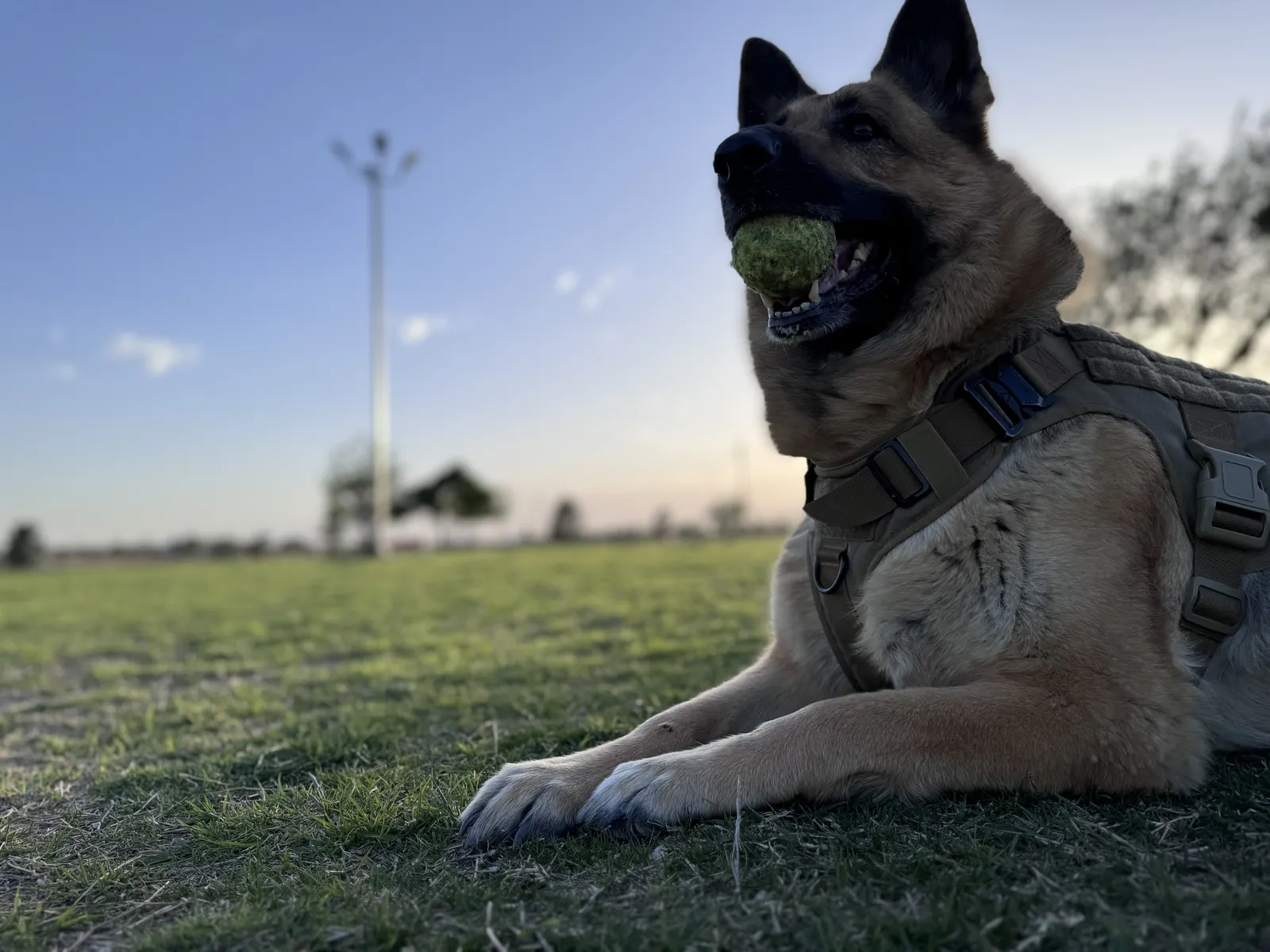
A study in Shelby's name
Shelby was my dog. I'm raising money to help fund a hemangiosarcoma research project named after her, ideally one working on early detection.
The exact study isn't set yet. When Morris and I settle on one, I'll name it here. Until then, gifts support Morris Animal Foundation's work.
November 1 would have been her 10th birthday. Give $10 for her 10th.
Gifts on Shelby's page go to Morris Animal Foundation, which runs the Hemangiosarcoma Initiative. Through November 30, I'll match every gift dollar for dollar, up to $1,000.
Sources
- Hemangiosarcoma in dogs, Cornell Riney Canine Health Center.
- Hemangiosarcoma Initiative: new findings, new therapies, new hope for dogs, Morris Animal Foundation, updated August 26, 2026.
- MicroRNA differential expression analysis in canine visceral hemangiosarcoma formalin-fixed, paraffin-embedded tissues, Ribas et al., Frontiers in Veterinary Science, March 17, 2026.
- Hemangiosarcoma research, AKC Canine Health Foundation.
- Changing the future of hemangiosarcoma, Modiano Lab, University of Minnesota College of Veterinary Medicine.
- Shine On Continuation, University of Minnesota Clinical Investigation Center.
- Cohort profile: The Golden Retriever Lifetime Study, Labadie et al., PLOS ONE, 2022.
- Trained dogs can detect the odor of hemangiosarcoma in canine blood samples, Wilson et al., The Veterinary Journal, 2026 (online November 29, 2025).
- Veterinary Clinical Trials Registry, American Veterinary Medical Association.
- Vaccine study for dogs with hemangiosarcoma, University of Florida College of Veterinary Medicine.
- Dog Aging Project.